Statement of the GACR Presidium to the announced public tenders to support projects with the expected start of implementation in the year 2021

In the context of the coronavirus epidemic in the Czech Republic, the scientific community warns that the announcement of a state of emergency disrupts the preparation of project proposals in the currently announced public tenders.

In an effort to respond to the current state of emergency and to accommodate as much as possible all researchers, the GACR Presidium has decided to cancel public tenders in research, development and innovation to support the EXPRO, JUNIOR STAR, standard and international bilateral projects announced by the Czech Science Foundation on 21 February 2020 in the Business Register (with the beginning of the competition period on February 22, 2020 and the end of the competition period on April 7, 2020) with the anticipated start of the implementation from January 1, 2021 and at the same time GA CR Presidium further decided on the immediate re-announcement of all these tenders in research, development and innovation from today with the expected implementation to begin on January 1, 2021.

The conditions of the newly announced public tenders in research, development and innovation will be identical to the conditions of the cancelled public tenders. By cancelling and re-announcing the tenders, the Czech Science Foundation meets the request of a large part of the scientific community for an extension to the period for submitting project proposals until 4 May 2020. This would otherwise not be possible within the current legal framework of the Act on Support of Research, Development and Innovation.

After careful consideration and consultation with representatives of research organizations, the GACR Presidium chooses this solution and these terms. This will ensure the extension of the submission period whilst keeping to the original deadlines for the evaluation (i.e. 2 November 2020 for the EXPRO and JUNIOR STAR projects and 1 December 2020 for standard grant projects and international bilateral projects).

Neither the period of uncertainty for organizations and research teams nor the beginning of project implementation will need to be extended to the following year. The Czech Science Foundation thus acts with maximum effort to maintain continuity of basic research funding as well as to provide more time for project proposal preparation to all applicants.

The GACR Presidium is aware of the fact, that it will only be possible to fulfil these commitments with the maximum effort of both evaluators and the GA CR Office staff and believes that this decision will be accepted by the scientific community with understanding.

Thank you for your understanding.
The relationship between fish and bivalve molluscs is an excellent model system for studying survival and the risk of coexistence in a rapidly changing environment

The project dealt with various aspects of inter-population variability in the success rate of biological invasions and their impact on native species. Experimental and field studies in the areas of invasion and original occurrence were combined. Population genetic studies of both native and invasive species were also an important part of the project. The project was covered by the topic of the relationship between bitterling and host bivalve molluscs.

The most important discovery was the confirmation of the fundamental impact of inter-popular differences in the success of invasions, their impact, but also in the degree of vulnerability of native organisms. This finding may help to explain the known fact that some species may enter non-indigenous areas in the long term without any visible impact on native organisms. Suddenly, however, there is a dramatic change, after which this non-native species has significant negative impacts.

doc. RNDr. Martin Reichard, Ph.D.
Institute of Vertebrate Biology of the Czech Academy of Sciences

Compared to the situation in Western Europe and the USA, Czech suburbs are not at risk of segregation

During 2014 – 2016, the team led by doc. Martin Ouředníček, the Head of the Research Team of the Urban and Regional Laboratory and Vice-Dean of the Faculty of Science of the Charles University, carried out the GACR project “Dynamics of social environment and spatial mobility in metropolitan regions of the Czech Republic”. The main objective of the project was to examine the dynamics of the social environment, which is influenced by various types of spatial mobility, such as migration or commuting.

The research focused on processes taking place in outer parts of post-socialist cities: residential suburbanization and transformation of housing estates. These processes differ significantly from developments in Western Europe and the United States, and the Czech Republic is quite unique in many areas.

doc. RNDr. Martin Ouředníček, Ph.D.
Faculty of Science of the Charles University

SOUVISEJÍCÍ ČLÁNKY

The HelD protein is important for correct gene expression

The project “Deciphering the Cellular Role of HelD, a Helicase-like Protein Associated with Bacterial RNA Polymerase” was a follow-up to the previous project, which focused on the study of several proteins that interact with bacterial RNA polymerase (RNAP) – an enzyme that is crucial for transcription of DNA into RNA. In this previous project, HelD was discovered as a new RNAP interaction partner, and given the central role of RNAP for gene expression that determines a cell’s ability to adapt to environmental changes or pathogens to survive in the host, it was very attractive to further study this protein and to obtain new information on functioning of the transcriptional apparatus.

Mgr. Libor Krásný, Ph.D.
Institute of Microbiology of the Czech Academy of Sciences

SOUVISEJÍCÍ ČLÁNKY

Cooperation with Swiss agency SNSF has been started

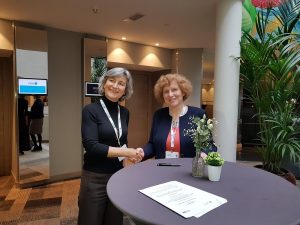
On 27 November 2019, GACR President signed a memorandum of understanding with the Swiss National Science Foundation on bilateral cooperation on the Lead Agency principle. This new cooperation enables scientists from the Czech Republic to carry out scientific projects in basic research with new foreign partners. The first call is announced now with the SNSF in the role of a Lead Agency. Projects duration is maximum 3 years.

Representatives of cooperating organizations

Detailed rules for submitting project proposals under the new LA cooperation will be published at the beginning of 2020.

Notification by Swiss Agency

SOUVISEJÍCÍ ČLÁNKY

The Czech Republic is one of the best in the world in the research of space asteroids

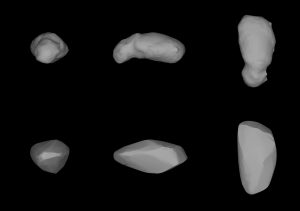
There are hundreds of thousands of known asteroids in the Solar System. We have detailed information on only a few thousand of them so far. The Czech Republic is a world power in creating models of these cosmic bodies. The GACR project “A big picture of the main asteroid belt – physical properties of asteroids derived by inversion of optical and infrared photometry” focused on the analysis of data on asteroids. The team led by doc. Mgr. Josef Ďurech, Ph.D., achieved to describe more than a thousand new cosmic bodies.

Model of planet Itokawa

In the area of asteroids modelling, the Czech Republic is the most productive in the world and these models are used by scientists around the world for further research and measurement. The results also serve for further basic research, for example to derive and obtain further information about the asteroid, such as its thermophysical parameters etc.

doc. Mgr. Josef Ďurech, Ph.D.
Astronomical Institute of Charles University

SOUVISEJÍCÍ ČLÁNKY

The project results can be used in the fields of electronics or tissue engineering

Most of us perhaps know that we divide burns by intensity into four basic groups. Even though extensive burns can be fatal, modern ways of treatment greatly improved the treatment results. Scientists are currently working on full replacement of the burnt skin.

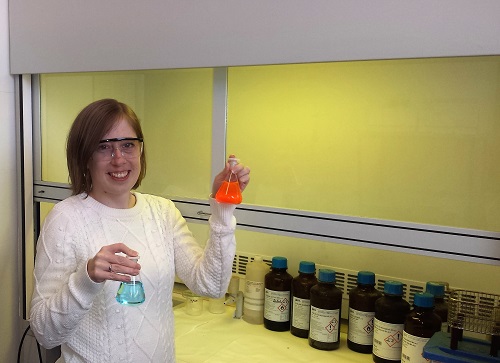
One of them is Ing. Alena Řezníčková Ph.D., who has been dealing with this task for three years as part of the project “Physically deposited and anchored metal nanostructures on solid substrate”. The main objective of the project was to modify the surface of the sample, polymer or glass, using physical and chemical methods to improve its properties for medical and electronics applications. The polymeric substrate itself is inert and therefore not suitable for other applications.

Ing. Alena Řezníčková Ph.D.

Ing. Alena Řezníčková Ph.D.
Department of Solid State Engineering

SOUVISEJÍCÍ ČLÁNKY

Cooperation within CEUS initiative has been started

On Monday 17 June 2019, the highest representatives of GACR, FWF (Austria), NCN (Poland) and ARRS (Slovenia) solemnly signed the “CEUS – Central European Science Partnership” Lead Agency Agreement: Memorandum of Understanding on the unilateral administration and mutual recognition of evaluation procedures. This new cooperation enables scientists from the Czech Republic, Austria, Poland and Slovenia to carry out scientific projects with new foreign partners based on the Lead Agency evaluation, which is among the increasingly preferred forms of cooperation between foreign agencies supporting basic research due to reduction of administrative burden. Within the CEUS initiative supporting basic research in the Central European region, scientists will be enabled to submit bilateral and also trilateral project proposals on the LA principle.

In brief:

SOUVISEJÍCÍ ČLÁNKY

GACR President’s award for excellent research 2019

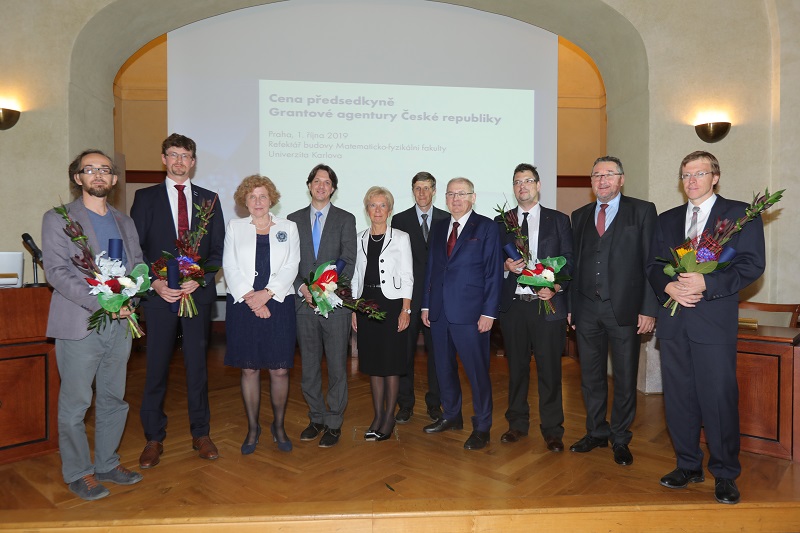
Five Principal Investigators of the top basic research projects received the GACR President’s Award 2019. In contrast to last year, when one female investigator was awarded, male investigators dominated this year’s award.

Zdeněk Sofer succeeded with a project investigating the application of ion beams for modifications of graphene-based structures. Jiří Bruthans examined the effect of gravity-induced stress on sandstone erosion. Marek Mráz’s project focused on studying the regulation of B cell receptor (BCR) signalling pathway by microRNAs. Laureate Václav Štětka analysed the role of social media in transformation of political communication and citizen participation in the Czech Republic. Another laureate, Robert Černý, focused on oro-pharyngeal interface during vertebrate primary mouth formation. The GACR presidium decided on the winners among dozens of different projects.

“Yet again, choosing the best projects has been extremely difficult this year. We face the challenge of selecting the best projects among dozens of projects every year. On the other hand, it is a good message on how brilliant scientists in our country are. Congratulations to award winners, their projects were indeed excellent,” Alice Valkárová, the GACR president, stated.

The GACR President’s Award was established in 2003. Since then, 69 awards have been given in response to the excellent results in carrying out basic research projects supported by GACR. This year’s five awarded projects were selected out of 448 projects that ended last year, based on proposals of the respective discipline committees. The GACR presidium decided on the final selection of projects for the GACR President’s Award this April.

The prize is awarded for excellent results in basic research projects that had been supported by GACR. The Principal Investigators of the chosen projects and their co-workers receive a financial reward. Every year, the award goes to four to five Principal Investigators, whose projects were completed in the previous year, received a nomination for the award and acquired excellent evaluation by expert advisory bodies.

SOUVISEJÍCÍ ČLÁNKY

Determination of chemical molecular structure, the chirality and the electronegativity of atom

doc. Ing. Pavel Jelínek, Ph.D.

Doc. Ing. Pavel Jelínek, Ph.D. from the Institute of Physics of the Czech Academy of Sciences together with his team was able to differentiate chemical structure of molecules on the surface of solid substance. The scientist developed comprehensive physical mechanism theory of this scanning. The key for obtaining this sub-molecular contrast is the placement of one molecule (e.g. carbon monoxide) or atom at the end of the metallic probe. The presence of the flexible particle at the end of the probe causes the strengthening of the signal which then enables to achieve unprecedented resolution of the molecules. This new method also proved the validity of the equation of the Nobel Prize winner Linus Pauling for the covalent bond from the 1930s.

SOUVISEJÍCÍ ČLÁNKY